
Which Way Should Your Ceiling Fan Spin?
The correct ceiling fan summer winter direction can make a real difference to your comfort and energy bills. In summer, your fan should spin anticlockwise (when viewed from below), pushing cool air directly down onto you. In winter, switch it to clockwise on a low speed to gently recirculate warm air that has risen to the ceiling.
Why Fan Direction Actually Matters in Geelong
Geelong’s climate is famously unpredictable. You can experience a scorching 38°C day followed by a chilly 12°C morning within the same week, especially during spring and autumn. That variability means your ceiling fan is genuinely useful across multiple seasons — but only if it’s spinning the right way.
Running your fan in the wrong direction won’t just fail to help — it can actively make a room feel less comfortable. In winter, an anticlockwise fan on high speed creates a wind-chill effect, making you feel colder even when your heater is working hard. Getting the direction right is one of the simplest, most overlooked ways to improve your home’s energy efficiency.
Ceiling Fan Summer Direction: Anticlockwise for Cool Relief
During Geelong’s hot summers, your ceiling fan blades should rotate anticlockwise at a medium to high speed. This creates a downdraft — a column of moving air that flows directly down into the room. That airflow accelerates the evaporation of perspiration on your skin, producing a wind-chill effect that can make a room feel up to 4°C cooler.
The practical benefit? You can set your air conditioner a few degrees higher and still feel comfortable. According to energy efficiency guidance, raising your thermostat by just 1°C can reduce cooling costs by around 10%. Your ceiling fan uses a fraction of the energy an air conditioner does, so running both together — fan anticlockwise, aircon set a little higher — is a smart strategy for Geelong summers.
Ceiling Fan Winter Direction: Clockwise for Warmth
In winter, switch your fan to rotate clockwise at a low speed. Warm air naturally rises and pools near the ceiling, which is largely wasted if you’re sitting at floor level. A clockwise rotation on low creates a gentle updraft along the walls, pushing that trapped warm air back down into the living space without creating a chilling breeze.
This is particularly useful in Geelong homes with high or raked ceilings, where heat stratification is a common problem. You’ll notice the room feels warmer at body level, which means your heater doesn’t need to work as hard. It’s a simple seasonal adjustment that costs nothing and can meaningfully reduce your heating bills through the cooler months.
How to Change Your Ceiling Fan Direction
Most ceiling fans have a small direction switch located on the motor housing — you’ll usually find it on the side of the cylindrical body just above the blades. Here’s how to change it safely:
- Turn the fan off completely and wait for the blades to stop spinning.
- Use a step ladder to reach the motor housing safely.
- Locate the small slide or toggle switch on the motor body.
- Flip the switch to the opposite position.
- Turn the fan back on and observe the blade rotation direction from below.
- In summer, blades should move anticlockwise; in winter, clockwise.
Some newer smart fans allow you to change direction via a remote control or a smartphone app, which makes the seasonal switch even easier. If your fan doesn’t have a direction switch or the switch no longer works, it’s worth having a licensed electrician inspect it.
Getting the Most From Your Ceiling Fan Year-Round
Beyond the correct ceiling fan summer winter direction, a few other habits will help you get maximum value from your fan. Always match the fan speed to the season — high speed in summer for strong airflow, low speed in winter to avoid a draught. Turn the fan off when you leave the room, since fans cool people, not spaces.
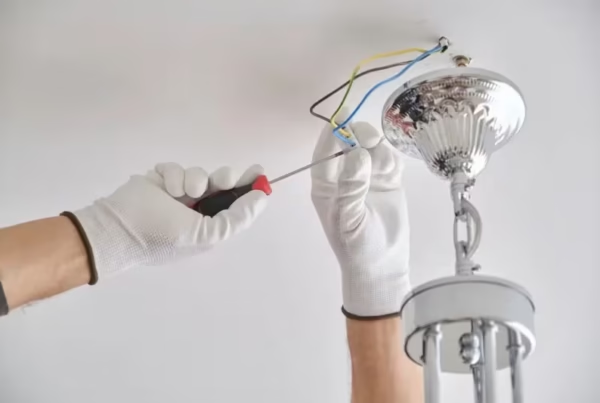
It’s also worth checking that your fan blades are clean. Dust-laden blades are less aerodynamically efficient and can reduce airflow noticeably. A quick wipe-down at the start of each season takes only minutes and makes a genuine difference. If you’ve recently had a new light or fan installation in Geelong, confirm with your electrician that the unit is correctly set up for your ceiling height and room size.
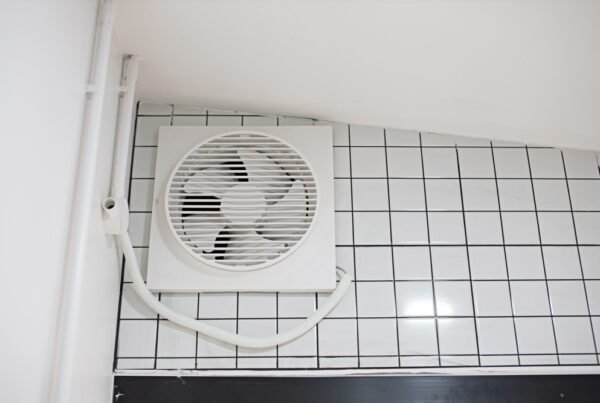
For rooms with high humidity — such as bathrooms — a ceiling fan alone isn’t always sufficient. A properly installed bathroom exhaust fan in Geelong works alongside your ceiling fan to manage moisture and improve air quality year-round.
When to Call a Professional
Most direction changes are straightforward DIY tasks, but there are situations where you should call a licensed electrician. If your fan wobbles, makes grinding or clicking noises, runs slowly on all settings, or the direction switch is broken or inaccessible, these are signs of a mechanical or wiring issue that needs professional attention.
Electrical work on ceiling fans — including installation, rewiring, or replacing a faulty motor — must be carried out by a licensed electrician under Australian standards (AS/NZS 3000). Attempting this work yourself is both illegal and dangerous. If you’re unsure about your fan’s condition or want a new fan installed correctly the first time, the team at BTD Electrical & Data are experienced local electricians serving Geelong and surrounding areas including the Surf Coast and Ocean Grove. Get in touch for honest, reliable advice and quality workmanship.
Conclusion
Understanding ceiling fan summer winter direction is one of the easiest and most cost-effective ways to improve comfort in your Geelong home. Anticlockwise in summer for a cooling downdraft, clockwise on low in winter to recirculate warm air — that’s the simple rule to remember. Combined with sensible thermostat settings, this small habit can noticeably reduce your energy bills across every season.
If your fan needs servicing, installation, or you’re not confident working at height, don’t hesitate to contact BTD Electrical & Data. Their team of qualified local electricians will ensure your fan is set up safely and performing at its best all year long.
Frequently Asked Questions
How do I know if my ceiling fan is spinning in the right direction for summer?
Stand directly below the fan while it’s running. If you feel a noticeable downward airflow — a gentle breeze hitting you from above — the fan is spinning anticlockwise, which is correct for summer. If you feel little to no airflow despite the fan running, it’s likely spinning clockwise and needs to be switched for the warmer months.
Does ceiling fan direction really make a difference to my energy bills?
Yes, it genuinely does. Using the correct direction allows you to run your air conditioner or heater less aggressively. In summer, the wind-chill effect of a correctly spinning fan means you can raise your thermostat by a few degrees. In winter, recirculating trapped warm air means your heating system doesn’t need to work as hard to maintain a comfortable temperature.
Can I install a ceiling fan myself in Geelong?
No. In Victoria — and across Australia — ceiling fan installation involves electrical wiring and must be carried out by a licensed electrician. This requirement exists under the Electricity Safety Act 1998 (Vic) and Australian wiring standards (AS/NZS 3000). Attempting to wire a ceiling fan yourself is illegal and poses a serious safety risk. Changing the direction switch on an existing, already-installed fan is fine to do yourself.
What ceiling fan speed should I use in winter?
In winter, always use a low speed when running your fan clockwise. The goal is to gently push warm air down from the ceiling without creating a draught. A high speed in clockwise mode will produce unwanted airflow that makes the room feel colder — the opposite of what you want. Low and slow is the right approach for effective winter use.