
Which Way Should Your Ceiling Fan Spin?
Getting your ceiling fan summer winter direction right is one of the simplest ways to improve comfort and reduce energy bills in your Torquay home. In summer, your fan blades should spin anticlockwise (when viewed from below), pushing cool air downward. In winter, switch to clockwise rotation to gently recirculate warm air that collects near the ceiling.
Why Fan Direction Actually Matters in Torquay
Torquay’s climate is famously changeable. You can experience a scorching 38°C northerly wind one day and a cool 15°C ocean breeze the next — sometimes in the same week. That variability means your ceiling fan is genuinely working year-round, not just during the peak of summer.
When warm air rises and pools near the ceiling in winter, your heater has to work harder to keep the living space comfortable. Switching your fan to clockwise at low speed pushes that trapped warm air back down along the walls and into the occupied zone, reducing your reliance on heating and trimming your electricity costs.
How to Change Your Ceiling Fan Direction
Most modern ceiling fans have a small direction switch located on the motor housing. Here’s how to change it safely:
- Turn the fan off completely and wait for the blades to stop spinning.
- Locate the direction switch — it’s usually a small slide or toggle on the side of the motor body.
- Flip the switch in the opposite direction from its current position.
- Turn the fan back on at a low speed to confirm the blades are now spinning the correct way.
- Adjust the speed — use low speed in winter so the airflow is gentle and doesn’t create a wind-chill effect.
Some newer smart fans allow you to change direction via a remote control or a smartphone app, which makes seasonal adjustments even easier. If your fan doesn’t have a direction switch, it may be a fixed-direction model — worth checking the manufacturer’s documentation.
Summer Fan Direction: Staying Cool on Hot Torquay Days
During summer, set your fan to spin anticlockwise at a medium to high speed. This creates a downdraught that produces a wind-chill effect on your skin, making the room feel several degrees cooler without actually lowering the air temperature. On hot inland days when the sea breeze hasn’t arrived yet, this can make a real difference to comfort.
Ceiling fans use a fraction of the energy that air conditioning does, so running your fan before reaching for the remote on the reverse-cycle unit is a smart habit. If you do run both, you can often raise your air conditioner’s set temperature by 2–4°C and still feel just as comfortable — that’s a meaningful saving on your power bill over a Torquay summer.
For more advice on electrical installations that improve home comfort, visit the team at BTD Electrical & Data’s Surf Coast electrician page.
Winter Fan Direction: Staying Warm Without Cranking the Heater
In winter, switch your fan to spin clockwise at the lowest speed setting. Because warm air naturally rises, your ceiling can be several degrees warmer than the floor level where you’re actually sitting. A slow clockwise rotation creates a gentle updraught that pulls cooler air up and pushes the warm air down along the walls without creating a draught you can feel directly.
This technique is particularly effective in Torquay homes with high or raked ceilings — a common architectural feature in coastal properties and newer builds around the Surf Coast. If you have a large open-plan living area, you may notice a significant difference in how evenly the room heats up.
It’s worth noting that using your ceiling fan in winter doesn’t replace adequate insulation or a good heating system — it simply helps distribute the warmth you’re already generating more efficiently.
Choosing the Right Fan Speed for Each Season
Speed matters just as much as direction. Here’s a quick reference:
- Summer: Medium to high speed, anticlockwise — maximise the wind-chill effect.
- Winter: Low speed, clockwise — redistribute warm air without creating a cooling draught.
- Transitional seasons (autumn/spring): Low to medium speed, anticlockwise — light air movement for mild comfort without overcooling.
Torquay’s spring and autumn can be unpredictable, so keeping your fan on a gentle anticlockwise setting during these shoulder seasons gives you flexibility without committing to full heating or cooling.
Ceiling Fan Placement and Blade Pitch
For a ceiling fan to work efficiently in either direction, it needs to be installed at the right height. Australian standards recommend the fan blades sit at least 2.1 metres above the floor and at least 300mm below the ceiling for optimal airflow. If your fan is mounted too close to the ceiling (flush-mounted on a very low ceiling), it may not move air effectively in either direction.
Blade pitch — the angle of the blades — also affects performance. Most quality fans have a blade pitch between 12 and 15 degrees. A pitch that’s too shallow won’t move enough air regardless of which direction it spins. If your fan seems ineffective even at high speed, blade pitch or motor quality may be the issue rather than direction alone.
If you’re considering a new installation or an upgrade, check out our light and fan installation services in Geelong for options that suit Torquay’s coastal lifestyle.
When to Call a Professional
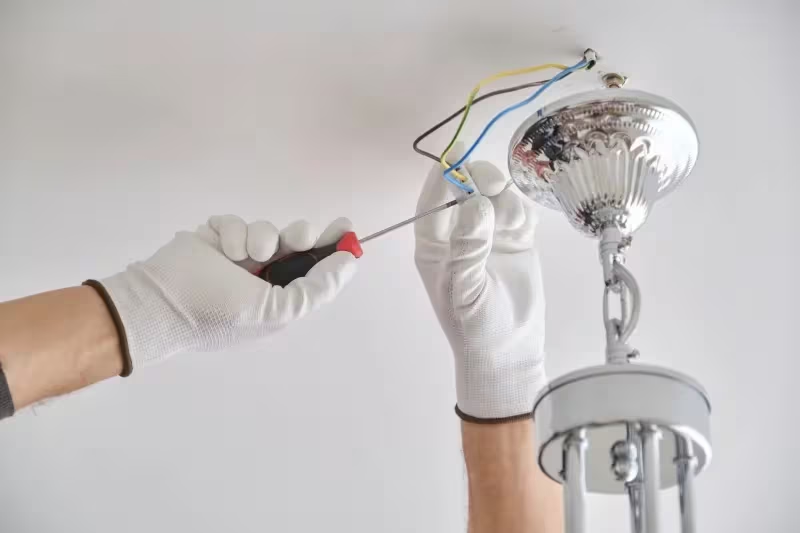
While changing fan direction is a simple DIY task, there are situations where you should call a licensed electrician. If your fan wobbles, makes unusual noises, trips a circuit breaker, or if you need a new fan installed or wired, these are jobs for a qualified professional. Attempting electrical work without a licence is illegal in Victoria and potentially dangerous.
The team at BTD Electrical & Data services Torquay and the surrounding Surf Coast region, handling everything from ceiling fan installation to full electrical safety checks. If you’re unsure about your fan’s wiring, the age of your switchboard, or whether your current setup is safe, don’t hesitate to get in touch with a local licensed electrician who knows the area.
For electrical safety standards in Victoria, the Energy Safe Victoria website is a reliable reference for homeowners wanting to understand their obligations and rights.
Conclusion
Understanding the correct ceiling fan summer winter direction is a small change that delivers real comfort and energy savings throughout the year. Anticlockwise in summer for cooling, clockwise in winter for warmth redistribution — it’s that straightforward. With Torquay’s varied coastal climate, making this seasonal switch is one of the easiest things you can do to keep your home comfortable without driving up your power bill.
If you need a new fan installed, an old one replaced, or any electrical work done in your home, reach out to BTD Electrical & Data — your local Surf Coast electricians who understand what Torquay homes need in every season.
Frequently Asked Questions
How do I know if my ceiling fan is spinning in the right direction for summer?
Stand beneath the fan while it’s running and hold your hand up toward the blades. If you feel a cool downdraught pushing air directly down onto you, the fan is spinning anticlockwise — which is correct for summer. If you don’t feel much airflow directly below, the fan may be spinning clockwise and should be switched for the warmer months.
Does ceiling fan direction really make a difference to my energy bills in Torquay?
Yes, it genuinely does. Using your fan correctly in summer can allow you to raise your air conditioner’s thermostat by 2–4°C, which can reduce cooling costs noticeably. In winter, redistributing warm air means your heater runs for shorter periods. Over an entire season, these savings add up — particularly during Torquay’s long, warm summers.
Can I change my ceiling fan direction myself, or do I need an electrician?
Changing the direction using the physical switch on the motor housing is a safe DIY task — just make sure the fan is completely stopped before you touch it. However, any work involving the wiring, mounting, or electrical connections of a ceiling fan must be carried out by a licensed electrician in Victoria. If you’re unsure, it’s always safer to call a professional.
What should I do if my ceiling fan doesn’t have a direction switch?
Some older or budget fans are fixed to spin in one direction only, typically anticlockwise. If your fan lacks a direction switch, it’s worth considering an upgrade to a more versatile model — especially if you want to take advantage of year-round energy savings. A licensed electrician can advise on suitable replacement options and handle the installation safely.