
What Does Resetting a Circuit Breaker Actually Mean?
Knowing how to reset a circuit breaker in your house is a fundamental skill every Geelong homeowner should have. When a circuit breaker trips, it cuts power to a specific area of your home to prevent overloading or electrical damage. Resetting it simply means returning the breaker switch to its active position — restoring power safely to that circuit.
This is not the same as fixing an underlying electrical fault. Resetting restores power; diagnosing why it tripped is a separate step you should never skip.
Why Do Circuit Breakers Trip in the First Place?
Before you reset anything, it helps to understand what caused the trip. Geelong homes — particularly older weatherboard properties and newer coastal builds — face a range of common causes.
- Overloaded circuit: Too many appliances drawing power from a single circuit at once, such as running a heater, air conditioner, and microwave on the same line during a hot summer day.
- Short circuit: A live wire contacts a neutral wire, causing a sudden surge of current. This is more serious than an overload.
- Ground fault: Current leaks from the circuit to an earthed component, often occurring in wet areas like bathrooms or laundries.
- Faulty appliance: A single defective appliance can cause repeated tripping on the same circuit.
- Ageing wiring: Older Geelong homes with outdated wiring are more prone to nuisance tripping and genuine faults.
Identifying the cause before you reset is important — if you just flip the switch back without investigating, you may be repeatedly exposing your home to a genuine hazard.
How to Reset a Circuit Breaker in Your House: Step-by-Step
Follow these steps carefully and you’ll have power restored safely in most straightforward situations. Always prioritise your personal safety above speed.
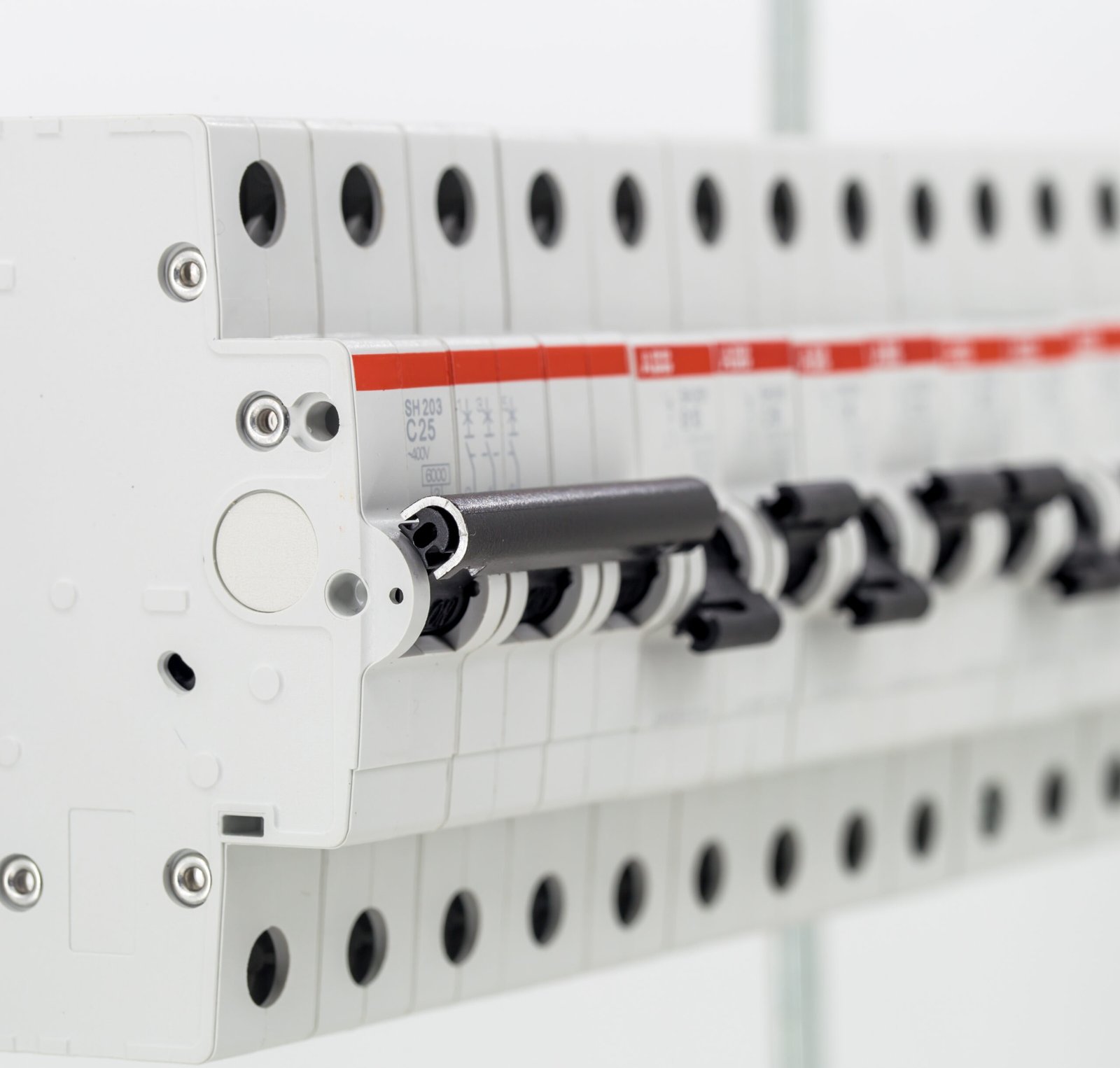
- Locate your switchboard (consumer mains board). In most Geelong homes, this is mounted on an external wall, in a garage, laundry, or hallway. Open the cover panel to expose the row of circuit breakers.
- Identify the tripped breaker. A tripped breaker will sit in the middle position — not fully ON and not fully OFF — or it may have flipped entirely to OFF. Some modern switchboards use a red or orange indicator window to flag a tripped breaker.
- Turn off or unplug appliances on that circuit. Before resetting, reduce the load. If the circuit serves your living room, unplug heaters, televisions, and any high-draw devices.
- Push the breaker firmly to the OFF position first. This is a step many people miss. You must fully reset the mechanism by pushing it to OFF before switching it back ON.
- Firmly switch the breaker back to ON. You should feel or hear a distinct click. The breaker should now hold in the ON position.
- Test the circuit. Switch lights on or plug in a low-draw appliance to confirm power has been restored.
- Gradually reconnect your appliances. Add them back one at a time to avoid immediately overloading the circuit again.
If the breaker trips again immediately or within a short time, do not keep resetting it. A repeatedly tripping breaker is signalling a real problem that needs professional attention.
Safety Rules You Must Follow at the Switchboard
Working near your switchboard requires basic but non-negotiable precautions. Australian Standard AS/NZS 3000:2018 (the Wiring Rules) governs electrical installations in Australia, and while homeowners can reset a breaker, any actual wiring work must be carried out by a licensed electrician.
Keep these safety rules in mind every single time:
- Never touch the switchboard with wet hands or while standing on a wet surface.
- Use a torch if the area is poorly lit — never reach blindly into a switchboard.
- Do not attempt to open the main switchboard enclosure beyond the breaker cover panel.
- If you smell burning, see scorch marks, or notice melted plastic near any breaker, stop immediately and call a licensed electrician.
- Never bypass or tape a breaker in the ON position — this is illegal and extremely dangerous.
If your home uses older ceramic fuse holders rather than modern circuit breakers, do not attempt to replace fuse wire yourself. This is a job for a licensed professional and a strong sign your switchboard needs upgrading. You can learn more about your rights and obligations at Energy Safe Victoria.
What to Do If the Breaker Keeps Tripping
A breaker that refuses to stay reset is telling you something important. Start by checking whether a single faulty appliance is to blame — plug each device back in one at a time and see which one causes the trip. If no single appliance is responsible, the issue may lie within the circuit wiring itself or the breaker may have reached the end of its service life.
Repeated tripping can also indicate that your home’s electrical load has simply outgrown its original circuit design — a common issue in Geelong homes that have had extensions, renovations, or new high-draw appliances like EV chargers or ducted air conditioning added over the years.
In these situations, a professional electrical safety check is the smartest next step, not another reset attempt.
When to Call a Professional
There are clear situations where resetting a breaker yourself is not appropriate and calling a licensed electrician is the only safe course of action. Contact a professional immediately if:
- The breaker trips again within minutes of being reset.
- You notice burning smells, scorch marks, or discolouration around the switchboard or power points.
- Multiple breakers trip at the same time.
- Your switchboard contains old ceramic fuses rather than modern circuit breakers.
- You hear buzzing, crackling, or popping sounds from the switchboard.
- Power loss affects your whole home rather than a single circuit.
BTD Electrical & Data services Geelong and the surrounding region, including coastal communities along the Surf Coast. If you’re dealing with a persistent electrical fault or a switchboard that needs upgrading, the team at BTD Electrical & Data’s electrical repairs service can diagnose and resolve the issue safely and to Australian Standards. For urgent faults, a 24-hour emergency electrician is available around the clock.
Conclusion
Understanding how to reset a circuit breaker in your house is a practical skill that every Geelong homeowner benefits from knowing. In most cases — particularly after an overload — a careful, methodical reset will restore your power without any professional involvement needed. The key is to reduce the load first, reset correctly, and watch for warning signs that indicate a deeper problem.
Never ignore a breaker that keeps tripping. Your switchboard is your home’s first line of defence against electrical fire and injury — treat it with respect. If you have any doubt at all about what’s causing the fault, reach out to BTD Electrical & Data for honest, expert advice from a local Geelong electrician you can trust.
Frequently Asked Questions
Is it safe to reset a circuit breaker yourself?
Yes, resetting a tripped circuit breaker is a task homeowners can safely perform, provided you follow basic safety precautions — dry hands, good lighting, and no signs of burning or damage near the switchboard. However, any actual wiring work or switchboard repairs must only be carried out by a licensed electrician under Australian law.
Why does my circuit breaker keep tripping even after I reset it?
A breaker that repeatedly trips usually indicates an overloaded circuit, a faulty appliance, a short circuit, or a wiring fault. Try unplugging appliances one at a time to isolate the cause. If the problem persists with no appliances connected, the circuit wiring or the breaker itself likely needs professional inspection.
How do I know which circuit breaker controls which room?
Most switchboards in Geelong homes have a label card inside the cover panel identifying each circuit. If yours is unlabelled or the labels are outdated, an electrician can map and label your circuits for you — a simple job that saves a lot of confusion during future faults.
Can a tripped circuit breaker cause damage to my appliances?
The circuit breaker itself is designed to protect your appliances and wiring by cutting power before damage occurs. However, the underlying fault that caused the trip — such as a power surge or short circuit — can sometimes damage sensitive electronics. If you’re concerned about a specific appliance after a trip, have it checked before continuing to use it. For more about what we do, visit our homepage.