
What Happens When a Circuit Breaker Trips?
If you’ve ever had the lights suddenly cut out or an appliance stop mid-cycle, a tripped circuit breaker is almost certainly the culprit. Knowing how to reset a circuit breaker in your house is one of the most practical skills any Torquay homeowner can have. In simple terms, a tripped breaker has automatically switched itself off to protect your wiring from overload or a fault — and resetting it is usually straightforward.
Circuit breakers are your home’s first line of defence against electrical fires and damaged appliances. Understanding what caused the trip — and how to safely restore power — can save you time, money, and unnecessary stress.
Understanding Your Switchboard
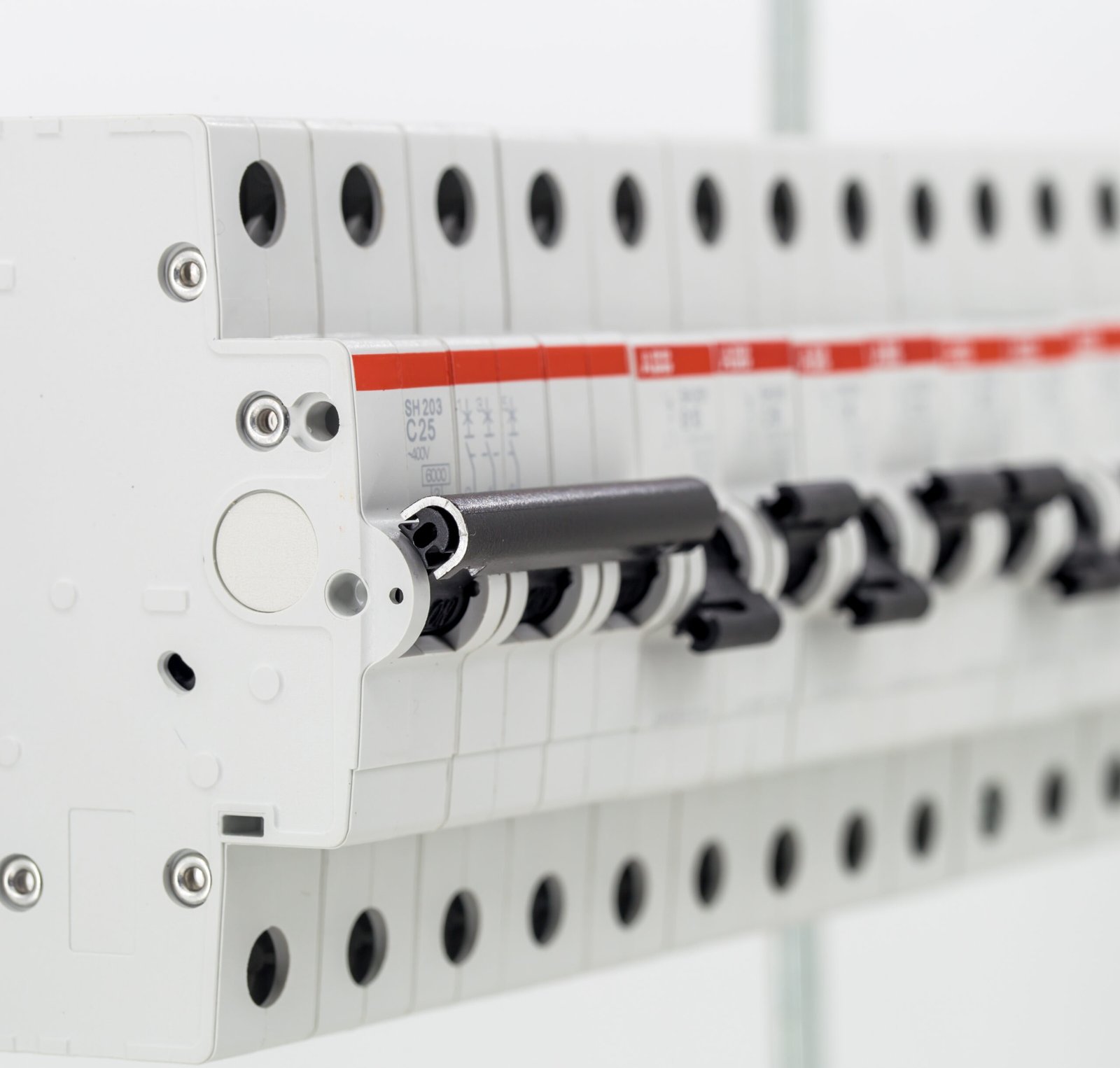
Before you do anything, you need to locate your switchboard (also called the meter box or distribution board). In most Torquay homes, this is mounted on an exterior wall, in a garage, or in a laundry. Open the cover and you’ll see a row of switches — these are your circuit breakers, sometimes called MCBs (Miniature Circuit Breakers).
Each breaker controls a different circuit in your home: lighting, power points, the oven, air conditioning, and so on. A tripped breaker will typically sit in a middle position between ON and OFF, or it may have flicked fully to the OFF position. Some models have a small indicator window that turns red when tripped.
How to Reset a Circuit Breaker in Your House: Step-by-Step
Follow these steps carefully to safely restore power to the affected circuit.
- Turn off or unplug appliances on the affected circuit before you reset anything. This reduces the load and helps prevent an immediate re-trip.
- Locate the tripped breaker in your switchboard — it will be in the middle or OFF position while all others remain ON.
- Stand to the side of the switchboard, not directly in front, as a precaution against any arc flash.
- Push the breaker firmly to the OFF position first, then switch it back to ON. Some breakers must be fully reset to OFF before they’ll engage again.
- Listen and observe — if it holds in the ON position, power should be restored. Gradually plug your appliances back in one at a time.
- If it trips again immediately, do not keep resetting it. This signals a deeper fault that requires professional attention.
This process applies to standard single-pole breakers found in most Australian residential properties. Always use dry hands and ensure the area around your switchboard is dry before touching anything.
Common Reasons Your Circuit Breaker Keeps Tripping
A one-off trip is usually nothing to worry about — it’s the breaker doing exactly what it’s designed to do. But if you find yourself resetting the same breaker repeatedly, there’s likely an underlying issue worth investigating.
The most common causes include:
- Circuit overload — too many appliances drawing power from a single circuit, which is common in older Torquay homes with fewer power point circuits.
- Short circuit — a hot wire touching a neutral wire, often caused by damaged wiring, a faulty appliance, or a loose connection.
- Earth fault (ground fault) — current leaking to the earth wire, which can also trigger a safety switch (RCD) rather than the breaker itself.
- Faulty or ageing breaker — older MCBs can become sensitive over time and trip under normal loads.
- High-draw appliances — reverse-cycle air conditioners, electric ovens, and EV chargers can strain circuits not rated for their load.
If you’ve recently installed something new or changed your appliance usage, that’s often the trigger. For homes along the Surf Coast, summer entertaining with multiple high-draw appliances running simultaneously is a very common cause of tripped breakers.
Safety Precautions You Should Never Skip
Electrical safety in Australia is governed by AS/NZS 3000:2018 (the Wiring Rules), which sets the standard for safe electrical installations. While resetting a breaker is a task you can handle yourself, there are important boundaries to respect.
Never attempt to reset a breaker that is warm or hot to the touch, shows signs of burning or discolouration, or emits a burning smell. These are warning signs of a serious fault. Similarly, if your switchboard is old and uses ceramic fuses rather than modern MCBs, leave it alone and call a licensed electrician — rewiring or replacing fuses yourself is illegal in Victoria and genuinely dangerous.
It’s also worth knowing that electrical safety checks can identify switchboard issues before they become emergencies — a smart investment for any homeowner.
When to Call a Professional
If your breaker trips repeatedly, won’t stay reset, or if you notice burning smells, flickering lights, or discolouration around your switchboard, it’s time to stop troubleshooting and call a licensed electrician. These symptoms point to faults that go well beyond a simple reset — and attempting to fix them yourself puts your home and family at serious risk.
The team at BTD Electrical & Data on the Surf Coast are experienced in diagnosing switchboard faults, circuit overloads, and wiring issues across Torquay and surrounding areas. Whether you need urgent fault-finding or a full electrical repair, they can help restore your home’s power safely and to Australian standards. Don’t delay — persistent electrical faults are a fire risk.
Conclusion
Knowing how to reset a circuit breaker in your house is a genuinely useful skill, and for most one-off trips, the process is simple and safe to handle yourself. Switch off your appliances, locate the tripped breaker, push it to OFF then back to ON, and reintroduce your appliances gradually.
However, if the breaker keeps tripping, feels hot, or your switchboard shows any signs of damage, don’t push your luck. Contact BTD Electrical & Data to have a licensed professional assess the issue — protecting your home is always worth it. For Torquay homeowners wanting peace of mind in 2026, staying on top of your electrical system is one of the smartest things you can do.
Frequently Asked Questions
Is it safe to reset a circuit breaker yourself?
Yes, resetting a tripped circuit breaker is generally safe for homeowners to do themselves, provided the switchboard is dry, your hands are dry, and the breaker shows no signs of heat, burning, or damage. If you have any doubts, call a licensed electrician.
Why does my circuit breaker keep tripping even after I reset it?
A breaker that repeatedly trips is signalling an ongoing problem — most commonly a circuit overload, a short circuit, or a faulty appliance. Unplug all devices on that circuit and try resetting again. If it still trips, you need a professional to investigate the wiring or the breaker itself.
What’s the difference between a circuit breaker and a safety switch (RCD)?
A circuit breaker (MCB) protects your wiring from overload and short circuits. A safety switch (Residual Current Device or RCD) protects people from electric shock by detecting current leaking to earth. Both may look similar in your switchboard but serve different purposes. Australian regulations require RCDs on power and lighting circuits in residential properties.
How do I know which breaker controls which area of my home?
Most switchboards have a label inside the cover indicating which breaker controls which circuit (e.g. “Kitchen,” “Bedroom Lights,” “Oven”). If yours isn’t labelled — which is common in older Torquay homes — a licensed electrician can map and label your circuits for you, making future troubleshooting much easier. For more about what we do, visit our homepage.