
The Short Answer: Why Do Lights Keep Flickering?
Why do lights keep flickering in your home? In most cases, flickering lights are caused by loose wiring connections, overloaded circuits, incompatible dimmer switches, or faulty light fittings. While some causes are minor, others signal serious electrical faults that pose a genuine fire or electrocution risk — and should never be left unchecked.
It’s Not Always a Simple Fix
Most Geelong homeowners notice flickering lights and assume it’s just a dying bulb. Sometimes that’s exactly what it is. But when the flickering continues after you’ve replaced the globe, or when it happens across multiple rooms, you’re likely dealing with something more significant happening inside your walls.
Older homes across Geelong — particularly those built before the 1980s — often have ageing wiring that wasn’t designed to handle modern electrical loads. Add in air conditioning, EV chargers, and multiple smart devices, and your system can be under real strain.
Common Causes of Flickering Lights in Geelong Homes
Understanding the root cause is the first step toward fixing the problem safely. Here are the most frequent culprits:
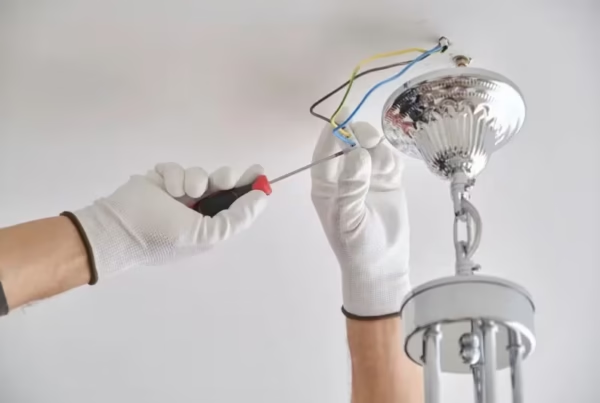
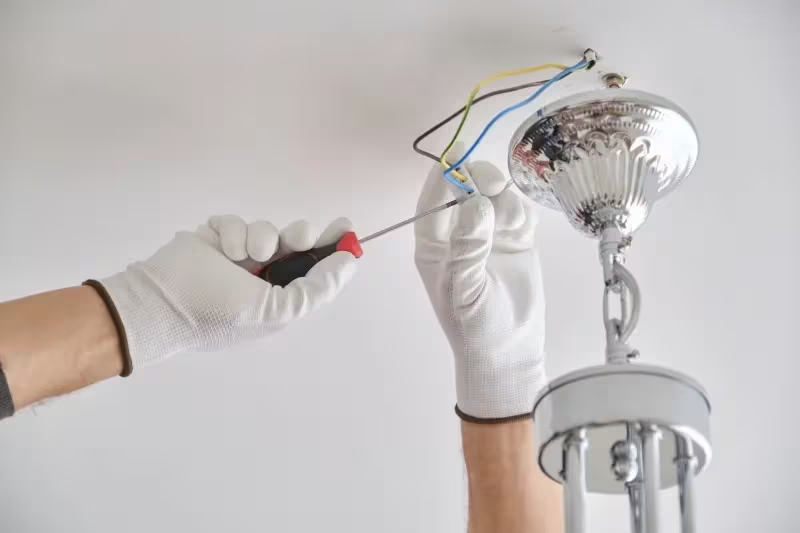
- Loose or corroded wiring connections: Over time, wire connections at switches, outlets, or the switchboard can loosen or corrode. This creates resistance and intermittent contact — the most common cause of persistent flickering.
- Overloaded circuits: When high-draw appliances like ovens, air conditioners, or pool pumps kick in, they can cause a momentary voltage drop that makes your lights dip or flicker.
- Incompatible dimmer switches: LED bulbs and older dimmer switches don’t always play nicely together. If your lights flicker only when dimmed, this is often the culprit.
- Faulty light fittings or globes: A loose globe in its socket or a fitting that’s reached the end of its life can cause intermittent flickering that looks far more alarming than it actually is.
- Voltage fluctuations from the grid: Occasional flickering caused by your neighbours running large appliances can briefly affect your supply. If this is frequent, it’s worth reporting to your energy distributor.
- Failing switchboard or circuit breaker: An ageing switchboard with worn components can cause inconsistent power delivery throughout your home.
Why Do Lights Keep Flickering? The Warning Signs You Can’t Ignore
Some flickering is a nuisance. Other flickering is a warning. Knowing the difference could protect your home and your family. Pay close attention if you notice any of the following alongside the flickering:
- A burning smell near power points, switches, or the switchboard
- Discolouration or scorch marks around outlets
- Circuit breakers tripping repeatedly
- Lights flickering in multiple rooms simultaneously
- Buzzing or crackling sounds from light fittings or walls
- Lights that flicker only when a specific appliance is switched on
These symptoms can indicate loose neutral connections, arcing faults, or deteriorating wiring — all of which are serious fire hazards. Under Australian Standard AS/NZS 3000 (the Wiring Rules), electrical installations must be maintained in a safe condition, and faults of this nature require attention from a licensed electrician.
What You Can Safely Check Yourself
Before calling a professional, there are a few simple things you can check without touching any wiring. First, try tightening the globe in its socket — a loose fit is a surprisingly common cause of flickering. If you’re using LED bulbs with a dimmer switch, check whether the dimmer is rated for LED use; this information is usually printed on the switch plate or available from the manufacturer.
You can also check your switchboard for any tripped breakers and reset them if needed. If a breaker trips again immediately, stop and call a licensed electrician — do not keep resetting it. For electrical repairs in Geelong, it’s always safer to have a qualified tradesperson assess the issue rather than attempt DIY fixes beyond these basic checks.
Flickering Lights and Older Geelong Homes
Geelong has a rich mix of housing stock, from heritage-listed Victorian cottages in Newtown to mid-century homes in Belmont and newer builds along the Surf Coast corridor. Older properties in particular are prone to wiring degradation, especially those still running older ceramic fuse systems rather than modern safety switches.
If your home doesn’t have a residual current device (RCD) installed, that’s an urgent safety concern on its own. A routine electrical safety check in Geelong can identify ageing infrastructure before it becomes a crisis — and it’s a smart investment for any homeowner, particularly before selling or renovating.
Coastal properties near Barwon Heads, Ocean Grove, and Jan Juc also face accelerated corrosion from salt air, which can affect wiring, switchboards, and fittings faster than properties further inland.
When to Call a Professional
If your flickering lights persist after checking the basics, or if you’ve noticed any of the warning signs listed above, it’s time to call a licensed electrician. This is not a situation to put off — electrical faults are a leading cause of house fires in Australia, and early intervention is far less costly than fire damage or injury.
BTD Electrical & Data serves homeowners across Geelong and the surrounding region, including the Surf Coast area. Whether you need a full switchboard inspection, a fault diagnosis, or urgent after-hours assistance, the team is equipped to identify the source of the problem and fix it safely and efficiently. Don’t wait until a flicker becomes a fault — contact BTD Electrical & Data today for a professional assessment.
Conclusion
Flickering lights are one of those household issues that are easy to dismiss but important not to ignore. In many cases, the cause is minor — a loose globe, an incompatible dimmer, or a brief voltage fluctuation from the grid. But persistent or widespread flickering, especially when combined with burning smells, tripping breakers, or buzzing sounds, points to a potentially dangerous electrical fault that demands professional attention.
Geelong homeowners — particularly those in older properties or coastal areas — should treat flickering lights as a prompt to have their electrical system reviewed. A proactive electrical safety check in Geelong gives you peace of mind and keeps your home and family protected. If you’re concerned about what your lights might be telling you, reach out to BTD Electrical & Data for expert advice you can trust.
Frequently Asked Questions
Is it dangerous if my lights keep flickering?
It can be. While occasional flickering from a loose globe or voltage fluctuation is generally harmless, persistent or widespread flickering may indicate loose wiring, arcing faults, or a failing switchboard — all of which are serious fire hazards. If flickering is accompanied by burning smells, tripping breakers, or buzzing sounds, contact a licensed electrician immediately.
Can flickering lights cause a house fire?
Yes, in some cases. Arcing faults — where electricity jumps across a gap in damaged or loose wiring — generate intense heat and can ignite surrounding materials. This is why flickering caused by loose connections or deteriorating wiring should never be ignored. Australian electrical standards require that faults like these be repaired by a licensed electrician.
Why do my lights flicker only when I turn on the air conditioner or another appliance?
Large appliances draw a significant amount of current when they start up, which can cause a brief voltage drop across your circuits. This is a common cause of momentary dimming or flickering. If it happens every time and is noticeable, it may indicate your circuits are overloaded or your switchboard needs upgrading to handle your home’s current electrical demand.
How much does it cost to fix flickering lights in Geelong?
The cost depends on the underlying cause. Replacing a dimmer switch or tightening a connection is a relatively simple and affordable job. However, if the issue involves rewiring, switchboard replacement, or fault tracing through older wiring, costs will be higher. A licensed electrician can provide an accurate quote after inspecting your system — most will offer an initial assessment to identify the problem before committing to a price. For more about what we do, visit our homepage.