
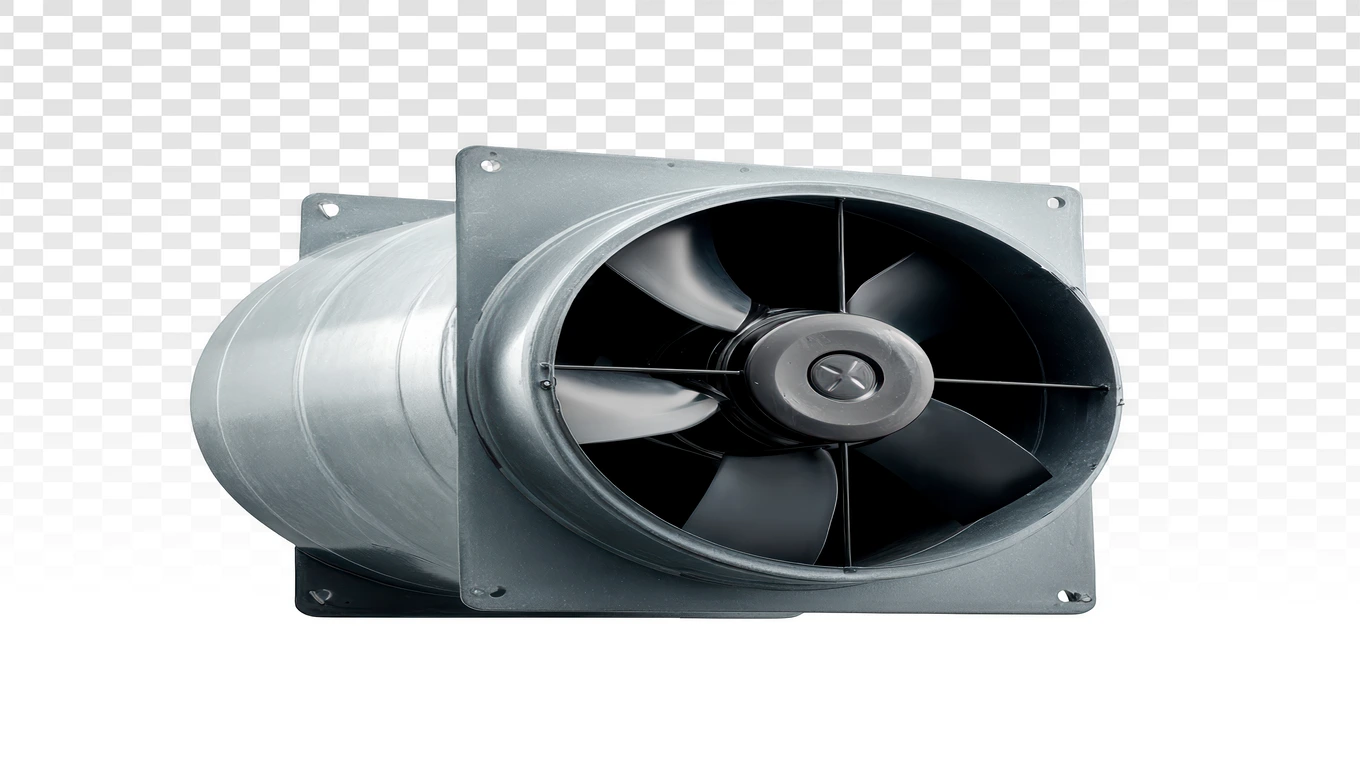
A bathroom exhaust fan often continues running because it has a built-in delay timer or humidity sensor. This is normally intentional and helps remove moisture after a shower. However, a fan that runs indefinitely, behaves differently than usual or produces heat, noise or a burning smell may have a faulty sensor, switch, timer or electrical connection.
Before assuming something is wrong, wait for the room to clear and observe whether the unit eventually turns off. Many systems are designed to operate for several minutes after the light or wall switch is turned off.
Why a Bathroom Exhaust Fan Runs After Switch-Off
It Has a Run-On Timer
A run-on timer keeps the extraction system operating for a preset period after you leave the room. This helps remove lingering steam, odours and humid air rather than stopping the airflow immediately.
Australian ventilation manufacturers offer bathroom fans with integrated run-on timers. Some models combine a timer with a humidistat for automatic moisture control.
The delay may be adjustable, but accessing wiring or internal controls should be left to an appropriately licensed person. Check the user manual for the expected operating time.
The Humidity Sensor Is Still Active
A humidity-controlled fan monitors moisture in the air. It may continue operating until humidity falls below its programmed threshold.
This can take longer when:
- The shower produced a large amount of steam
- The bathroom door and windows are closed
- Outside air is already humid
- The fan is undersized for the room
- The duct is long, restricted or poorly positioned
- Towels and wet surfaces continue releasing moisture
Humidity sensors can also activate a fan automatically when moisture rises.
The Fan and Light Use Separate Controls
Some bathrooms have one switch for the light and another for ventilation. Other installations use a multi-function switch or control module that is not immediately obvious.
Confirm that all labelled controls are in the correct position. Do not repeatedly operate unknown switches if the fan is making unusual sounds or showing signs of damage.
A Smart Control or Automation Is Operating It
Smart home systems may run ventilation according to a programmed schedule, occupancy sensor or humidity reading. The physical switch may not override every automation rule.
Check the relevant application or control panel for active timers, scenes and schedules. A recent software or configuration change may explain why the operation has changed.
When Continued Running May Indicate a Fault
Normal operation should follow a reasonably consistent pattern. A fan that previously stopped after ten minutes but now runs for hours may require investigation.
Possible faults include:
- A timer relay stuck in the on position
- A failed or contaminated humidity sensor
- Incorrect control settings
- A damaged wall switch
- A wiring fault
- Moisture entering electrical components
- Incorrect installation
- A smart control that has lost its configuration
The fan motor itself may still be working correctly while the control device keeps supplying power.
Check Whether Moisture Is Actually Clearing
Hold a piece of toilet paper near the grille without pushing it into the opening. A working fan should generally draw the paper towards the grille while operating.
Weak airflow may mean the grille is dusty, the duct is obstructed or the unit is not suitable for the room. If steam remains on mirrors and walls for a long time, the system may be running continuously because it cannot reduce humidity effectively.
A fan that vents into the roof space instead of an appropriate discharge point may also contribute to moisture problems. Duct routing and termination should be assessed during installation rather than assumed from what is visible inside the bathroom.
Safe Checks You Can Complete Yourself
Before arranging repairs, you can perform several non-electrical checks:
- Wait for the normal run-on period to finish.
- Open the bathroom door to improve replacement airflow.
- Check the product manual for timer and sensor functions.
- Review smart home schedules or automation settings.
- Look for visible dust on the external grille.
- Note whether the room remains unusually humid.
- Record how long the fan continues operating.
You may clean a removable external grille only when the manufacturer’s instructions allow it and the power has been safely isolated. Never insert tools, fingers or liquids into the fan.
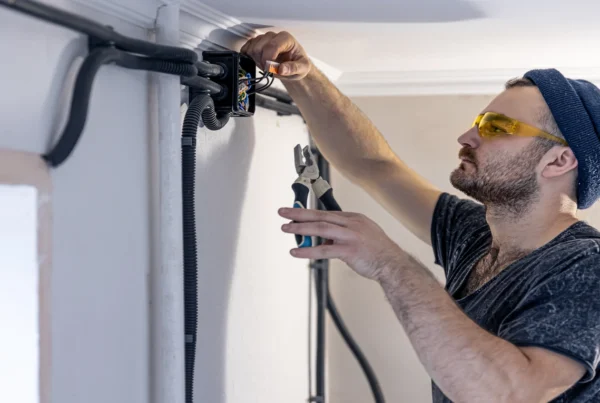
Do not remove fixed covers, alter wiring or access a ceiling space containing electrical equipment. Queensland’s Electrical Safety Office advises householders not to perform their own electrical work and requires licensed workers to comply with applicable safety requirements and standards.
Why Proper Bathroom Ventilation Matters
Bathrooms produce warm, moisture-laden air. Without effective extraction, moisture can settle on ceilings, walls, window frames and cabinetry.
Ongoing condensation may contribute to peeling paint, swollen materials, corrosion and mould growth. Better ventilation can also help towels dry and make the room more comfortable after bathing.
The solution is not always a larger fan. Performance depends on room volume, duct diameter, duct length, bends, replacement airflow and where the air is discharged. A high-capacity unit connected to restrictive ducting may still perform poorly.
Should You Turn the Fan Off at the Switchboard?
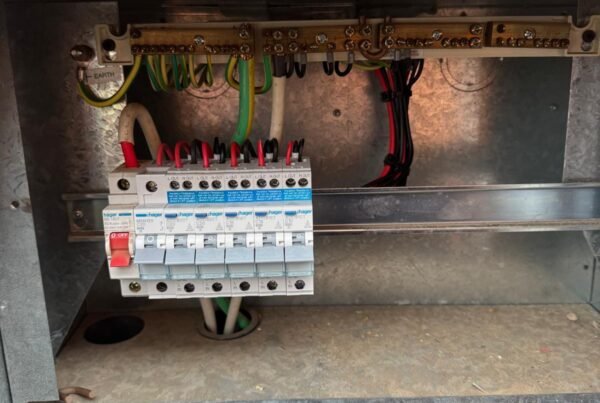
Do not use the switchboard as a routine fan control. Switching off the entire circuit may also disconnect lights or other equipment and can hide the original fault.
Immediate isolation may be appropriate when the unit smells burnt, produces smoke, becomes unusually hot or makes severe grinding or arcing sounds. Only approach the switchboard when it is safe to do so and there is no smoke, fire or water nearby.
For smoke or fire, leave the property and call Triple Zero on 000. Fire and Rescue NSW advises people to get out, stay out and call emergency services during a home fire.
When to Call a Professional
Arrange an inspection if the bathroom exhaust fan does not turn off after a reasonable period, starts without an obvious trigger or no longer follows its usual pattern. You should also seek help when airflow is weak, the switch feels warm or the unit is noisy.
BTD Electrical & Data can assess the fan, controls, power supply and visible ducting to determine whether the behaviour is normal or caused by a fault. Depending on the findings, the solution may involve adjusting controls, replacing a sensor, correcting wiring or installing a more suitable ventilation unit.
Do not ignore burning smells, sparking or signs of water entering electrical components. Disconnecting and repairing fixed electrical equipment must be handled by a licensed professional.
Conclusion
A fan that continues briefly after switch-off is usually operating as designed. Timers and humidity sensors allow the system to remove moisture after you have finished using the bathroom.
If the bathroom exhaust fan runs continuously, changes behaviour or shows signs of overheating, BTD Electrical & Data can diagnose the cause and recommend a safe, practical repair. Early attention can improve ventilation while preventing unnecessary energy use and damage to the room.
Frequently Asked Questions
How long should an exhaust fan run after a shower?
The ideal period depends on the fan, room size and humidity. Many timer-controlled units operate for several minutes, while humidity-controlled systems run until moisture levels fall.
Can high outdoor humidity keep the fan running?
Yes. Humid outdoor conditions can make it harder for the sensor to reach its shut-off level, particularly in a closed or poorly ventilated room.
Why does the fan turn on by itself?
A humidistat, motion sensor, smart home automation or shared control circuit may activate it. Unexpected operation can also indicate a control fault.
Can I replace the fan myself?
Replacing a plug-in unit may depend on its design and installation, but fixed wiring must be handled by an appropriately licensed electrical worker. Seek professional advice before removing the existing unit.