

Why Cold Weather Affects EV Chargers in Torquay
If your EV charger not working in cold weather has left you stranded in the driveway on a frosty Torquay morning, you are not alone. Cold temperatures — even the mild single-digit nights the Surf Coast regularly sees in winter — can trigger charging faults, reduced charge rates, and complete charging failures. Understanding why this happens is the first step to fixing it fast.
Torquay’s coastal climate brings damp, cold winters that combine low temperatures with high moisture. This combination creates specific challenges for both your EV’s onboard battery management system and the home charging unit itself.
How Cold Temperatures Interfere With EV Charging
Lithium-ion batteries — the technology powering virtually every modern EV — become significantly less efficient in cold conditions. When battery cell temperature drops below around 10°C, internal resistance increases, which slows the rate at which the battery accepts charge. Your car’s battery management system (BMS) deliberately throttles the incoming charge rate to protect the cells from damage.
This means your charger may appear to be working, but charging is painfully slow or seems to have stalled altogether. In some cases, the BMS will refuse to accept a charge at all until the battery warms up to a safe operating temperature. This is a built-in safety feature, not a fault with your charger or your home’s wiring.
Common Causes of an EV Charger Not Working in Cold Weather
Not every cold-weather charging issue is caused by the battery alone. Here are the most common culprits Torquay drivers encounter:
- Battery preconditioning not activated: Most modern EVs allow you to schedule charging or precondition the battery while still plugged in. If you skip this step, your battery may be too cold to accept a full charge rate.
- Moisture ingress in the charging unit: Coastal air and overnight dew can introduce moisture into outdoor charging equipment, causing internal corrosion or triggering safety shutdowns.
- Thermal protection mode on the EVSE: Your Electric Vehicle Supply Equipment (EVSE — the wall unit) has its own thermal management. Extreme cold can cause the unit to enter a protection mode and pause charging.
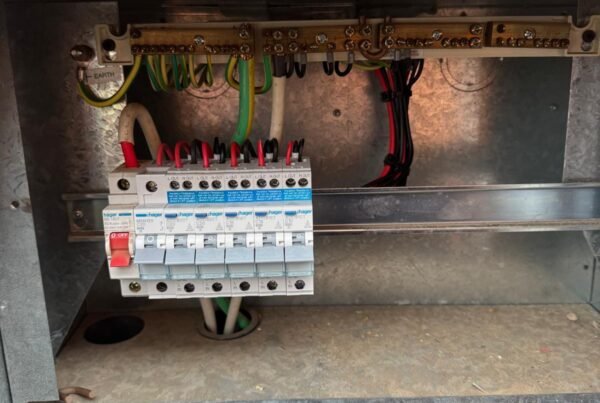
- Tripped RCD or circuit breaker: Cold weather can increase the load on your home’s electrical circuits, sometimes tripping a residual current device (RCD) or circuit breaker that supplies the charger.
- Faulty or degraded charging cable: Rubber and plastic components in charging cables stiffen and crack in cold conditions, potentially causing a poor connection or a safety fault.
- Software or firmware glitches: Temperature fluctuations can occasionally cause the charger’s onboard software to behave unexpectedly, requiring a reset.
Simple Troubleshooting Steps You Can Try Yourself
Before calling anyone, there are several straightforward checks you can perform safely at home. Always ensure your hands are dry and you are not working in wet conditions before touching any electrical equipment.
- Check your EV’s mobile app or dashboard display to confirm whether the battery is in a low-temperature protection state. If so, allow the vehicle to warm up or activate preconditioning via the app.
- Inspect your home’s switchboard and reset any tripped RCD or circuit breaker associated with the EV charger circuit.
- Power-cycle the EVSE by switching it off at the wall, waiting 30 seconds, and switching it back on.
- Inspect the charging cable and connector for visible damage, cracking, or moisture. If you spot damage, do not use the cable.
- Check the charging port on your vehicle for any moisture or debris and dry it gently with a clean, dry cloth if needed.
These steps resolve a surprising number of cold-weather charging issues without any professional involvement. For more information on safe home electrical practices, the Australian Government’s EV guidance for households is a useful starting point.
Protecting Your EV Charger Against Torquay’s Winter Conditions
Prevention is far more effective than troubleshooting at 7am when you need to get to work. If your charger is installed outdoors or in an open garage, consider a weatherproof enclosure rated to at least IP55 for coastal environments. This protects internal components from the salt-laden air and moisture that Torquay’s winters consistently deliver.
Scheduling your EV to charge during the warmest part of the night — typically between midnight and 3am when overnight temperatures are at their lowest before rising slightly toward dawn — can also help. Many EVs and smart chargers allow you to programme charging windows through an app. You can learn more about EV charger installation and options that include smart scheduling features.
Parking in a garage, even an uninsulated one, makes a meaningful difference. Studies consistently show that a sheltered vehicle battery retains significantly more charge capacity overnight compared to one left exposed to the elements.
When to Call a Professional
If you have worked through the troubleshooting steps above and your EV charger is still not working in cold weather, it is time to bring in a licensed electrician. Persistent faults, repeated RCD trips, burning smells, scorch marks near the charging unit, or any visible damage to wiring are all situations that require professional attention — do not attempt to investigate these yourself.
Electrical work on EV charging systems in Victoria must be carried out by a licensed electrician in accordance with AS/NZS 3000 wiring rules and relevant Energy Safe Victoria requirements. DIY repairs are illegal and dangerous. The team at BTD Electrical & Data on the Surf Coast are experienced with EV charging systems across Torquay and the surrounding region. Whether you need a fault diagnosed, a unit replaced, or a new dedicated circuit installed, BTD Electrical & Data can help you get back on the road safely. Call them to arrange an inspection at a time that suits you.
Conclusion
An EV charger not working in cold weather is a frustrating but usually solvable problem. In most cases, the issue comes down to battery thermal protection, moisture, a tripped circuit, or a simple software reset — all things you can check yourself before reaching for the phone. However, when the problem persists or involves any sign of electrical damage, professional help is essential.
Torquay winters are mild by most standards, but the combination of cold nights and coastal moisture is enough to cause real headaches for EV owners. Taking a few preventative steps now — weatherproofing your charger, using scheduled charging, and keeping your vehicle sheltered — will save you significant frustration through the colder months. If you need expert support, reach out to a qualified local electrician on the Surf Coast who understands the specific conditions in your area.
Frequently Asked Questions
Why does my EV charge so slowly on cold mornings in Torquay?
Slow charging in cold weather is almost always caused by your EV’s battery management system reducing the charge rate to protect lithium-ion cells from damage at low temperatures. This is a normal safety feature. Activating your vehicle’s battery preconditioning function — usually available through the car’s app — before you charge will help the battery reach an optimal temperature and accept a faster charge rate.
Is it safe to charge my EV outside during winter on the Surf Coast?
Yes, provided your EVSE is rated for outdoor use and is appropriately weatherproofed for a coastal environment. Look for an IP55 or higher ingress protection rating. If your current unit was not designed for outdoor installation, have a licensed electrician assess and upgrade it before winter sets in.
Can cold weather permanently damage my EV charger or battery?
Repeated exposure to moisture and cold can degrade outdoor charging equipment over time, particularly if the unit lacks adequate weatherproofing. Your EV battery itself is protected by the BMS from charging damage, but deep discharging in cold conditions over many cycles can contribute to long-term capacity loss. Keeping the battery above 20% charge during winter helps minimise this risk.
Who do I call if my EV charger keeps tripping the circuit breaker in cold weather?
Repeated RCD or circuit breaker trips indicate a fault that needs professional diagnosis — it could be an issue with the charger unit, the dedicated circuit, or your home’s switchboard. Contact a licensed electrician such as BTD Electrical & Data, who service Torquay and the broader Surf Coast region, to carry out a thorough inspection and repair in line with Australian wiring standards. For more about what we do, visit our homepage.