
A bathroom can become humid surprisingly quickly. A warm shower fills the room with steam, while wet towels, floors and limited airflow can leave moisture hanging around long after the water is turned off. Over time, that constant dampness can contribute to condensation, mold and damage to painted or sealed surfaces.
For homeowners in Torquay, choosing the right bathroom exhaust fans deserves a little more thought than simply picking a model that fits the existing ceiling opening. The size of the room, airflow capacity, ducting, noise level and controls can all affect how well the fan performs.
Why Bathroom Ventilation Matters in Torquay
Think about what happens during an ordinary shower. The mirror fogs up, steam collects around the ceiling and moisture settles on walls and other surfaces. If there is not enough ventilation, the room can stay damp for quite a while afterwards.
Repeated exposure to moisture can create a suitable environment for mold. Grout may become discolored, paint can deteriorate and musty smells may become noticeable.
Bathroom exhaust fans can help by removing humid air from the room and directing it outside through suitable ducting. They will not fix plumbing leaks or damaged shower seals, but they can deal with moisture created through everyday bathroom use.
Natural ventilation can also help. Opening a window may be useful when the weather and privacy allow it, but it is not always practical. A mechanical ventilation system provides another option when relying on a window is inconvenient.
What Should You Check Before Buying a Fan?
Choosing a fan should start with the bathroom itself rather than the product packaging. Consider the room size, ceiling height, shower position and frequency of use.
It is also worth checking whether the bathroom already has ducting and where that duct leads. These details can influence which fan will work effectively.
1. Look at Airflow Capacity
Airflow is one of the first specifications worth checking. The fan needs to move enough humid air out of the room without struggling against poor ducting.
A small ensuite will usually have different ventilation requirements from a larger family bathroom. The amount of steam produced and how frequently the room is used can also make a difference.
Ducting matters just as much. A fan with a strong airflow rating may not perform as expected if the duct is too narrow, excessively long or contains several sharp bends.
For that reason, bathroom exhaust fans should be selected as part of the whole ventilation setup rather than based on airflow figures alone.
2. Check the Noise Level
Noise can easily be overlooked when buying a fan. A model may seem fine for a few minutes in a showroom, but hearing the same sound every morning and evening can become irritating.
This is especially important when the bathroom is close to a bedroom, nursery or living area.
Check the manufacturer’s noise rating when comparing models. A quieter fan may be a better choice for a frequently used bathroom, provided it still has enough airflow for the room.
The quietest model is not automatically the right choice. Noise, airflow and the quality of the installation all need to be considered together.
3. Consider Energy Use
An exhaust fan usually does not consume a large amount of electricity, but it may be used regularly throughout the year.
An efficient motor can help avoid unnecessary energy consumption, particularly in a busy household. Controls can also help prevent the fan from being left running for hours.
A timer is one simple option. It allows the fan to continue operating after a shower before automatically switching off.
The aim is not to keep the fan running all day. It is to provide enough extraction to remove excess moisture without wasting energy.
4. Think About Controls
A standard wall switch may be all that is required in some bathrooms. Other households may find a timer or humidity sensor more convenient.
A timer allows the fan to continue operating after the shower without relying on someone to remember to switch it off.
Humidity-sensing models take a different approach. They detect increased moisture levels and can activate when humidity rises.
These features can make bathroom exhaust fans easier to manage, although they are not necessary for every bathroom. Think about your household routine before paying extra for automation.
5. Pay Attention to the Ducting
The fan grille is what you see from inside the bathroom, but the ducting behind it has a major role in ventilation performance.
Humid air needs a suitable path to the outside. Poorly sized ducting, excessive bends or a long run can restrict airflow and make the fan noisier.
The discharge point also matters. Moist air should not simply be released into an enclosed roof cavity because doing so can transfer the moisture problem elsewhere.
When replacing an existing unit, check where the current duct leads and whether it is still in good condition.
A Simple Comparison of Bathroom Exhaust Fans
When comparing bathroom exhaust fans, practical specifications are usually more useful than appearance alone.
|
Feature |
What to Look At |
Why It Matters |
| Airflow | Capacity suited to the room |
Helps remove humid air |
|
Noise |
Manufacturer’s noise rating | Affects everyday comfort |
| Motor | Efficiency and construction |
Influences operation and energy use |
|
Controls |
Switch, timer or sensor | Makes operation easier |
| Ducting | Size, length and bends |
Can affect extraction |
|
Discharge |
Where air exits | Helps manage moisture |
| Maintenance | Cleaning and access |
Supports long-term performance |
There is no universal setup. A small ensuite may work well with a basic model, while a larger family bathroom could benefit from a timer or humidity sensor.
Choosing Bathroom Ceiling Exhaust Fans
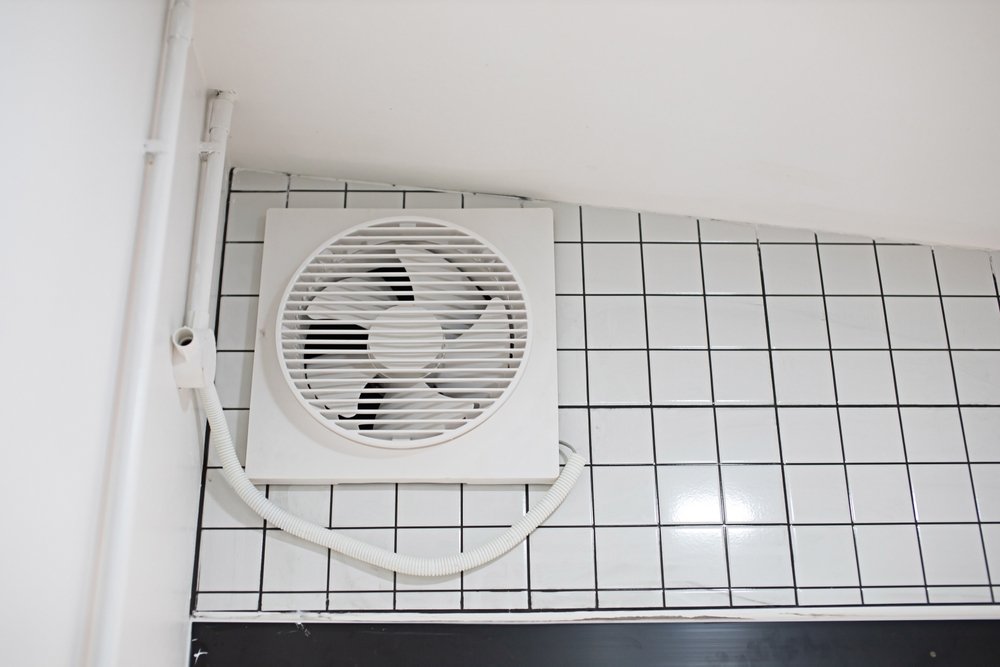
Bathroom ceiling exhaust fans are widely used because warm, humid air rises, helping remove moisture from the upper part of the room. When choosing bathroom exhaust fans, positioning is important to ensure effective airflow around lights, insulation and other ceiling fixtures.
Positioning still needs to be considered carefully. The fan should be located where it can collect humid air effectively while working around lights, insulation and other ceiling fixtures.
Older homes can present additional challenges. Renovations may have changed the ceiling layout, wiring or ducting, so the easiest-looking installation is not always the most suitable one.
Ducting should be considered at the same time. A reasonably direct route outside is generally preferable to a long path with several tight bends.
How Bathroom Ventilation Helps With Moisture
Bathroom ventilation fans work best when they are used while moisture is being produced rather than waiting until the room is completely filled with steam. Bathroom exhaust fans can help remove humid air as it develops.
Turning the fan on during a shower allows humid air to be removed as it develops. Keeping it running afterwards gives the remaining moisture time to clear.
Homeowners can also help by allowing towels to dry properly, wiping away standing water and repairing leaks promptly.
A window may provide additional airflow when outdoor conditions are suitable. However, cold weather, rain and privacy concerns can make this less practical.
A properly designed ventilation system provides a more consistent way to manage bathroom humidity.
Why Installation Matters as Much as the Fan
Buying a good fan does not guarantee good ventilation. Installation has a direct effect on performance.
Incorrect positioning, poor ducting or unsuitable connections can reduce airflow even when the fan itself has good specifications.
The electrical side also needs attention. Bathroom electrical work must account for the wet environment and applicable safety requirements.
For that reason, bathroom exhaust fans should be installed by a licensed electrician when electrical work is required. A qualified installer can assess the existing wiring, fan position and ducting before carrying out the work.
In Victoria, electrical installations must comply with relevant safety requirements. Professional installation therefore supports both safe operation and reliable performance.
Can Better Ventilation Help With Mold?
Mold needs moisture to grow, so reducing excess humidity can help create a less favorable environment for it. The Australian Government also recommends adequate home ventilation as part of managing indoor dampness and mold.
If mold keeps returning despite regular cleaning, however, ventilation may not be the only issue. Leaking plumbing, damaged shower seals, condensation or other sources of dampness should also be investigated.
Installing bathroom exhaust fans can help when inadequate ventilation is contributing to the problem, but a fan cannot repair a water leak or structural dampness.
A sensible moisture-control routine combines ventilation with cleaning, maintenance and timely repairs.
Keeping Your Exhaust Fan in Good Condition
Dust and lint can gradually build up around an exhaust fan grille. As the buildup increases, airflow may become weaker.
Follow the manufacturer’s cleaning instructions and avoid exposing electrical components to unnecessary moisture.
It is also worth paying attention to changes in sound. Rattling, grinding or difficulty starting may indicate that the fan needs inspection.
Simple maintenance can help bathroom exhaust fans continue operating properly and may also highlight problems before they become more serious.
When Should You Replace an Existing Fan?
Age alone does not necessarily mean a fan needs replacing. Performance is a more useful indication when assessing bathroom exhaust fans.
A fan that has become unusually loud, produces weak airflow or takes much longer to clear steam should be investigated.
Sometimes the problem is simply a dirty grille or restricted duct. In other cases, the motor may have deteriorated or the existing unit may no longer suit the bathroom.
A replacement may also be worth considering if you want features such as improved efficiency, automatic humidity control or timer operation.
Signs Your Bathroom Needs Better Ventilation
Some ventilation problems develop gradually. Watch for signs such as:
- Mirrors staying fogged for a long time after showering
- Regular condensation on the ceiling
- A recurring musty smell
- Mold around grout or ceiling corners
- Flaking or discolored paint
- Towels taking unusually long to dry
- Weak airflow from the existing fan
- Rattling or unusual operating sounds
These signs do not automatically mean the fan needs replacement. The ducting, fan position or another moisture source could be responsible.
An inspection can help identify whether cleaning, repair, ducting work or replacement is the appropriate solution.
Choosing a Suitable Setup for a Torquay Home
When comparing bathroom exhaust fans, start with the way your bathroom is actually used.
Consider the number of people using the room, shower frequency and the amount of steam produced. Think about whether noise could be an issue and check the existing ducting arrangement.
A timer can be useful for a busy household, while a humidity sensor may suit people who often forget to turn the fan on.
There is little value in paying for features that will rarely be used. The most suitable system is usually one that matches the bathroom’s practical needs.
What to Consider When Replacing an Old Fan
Replacing an existing unit is not always a straightforward swap. The old ducting may be damaged, restricted or unsuitable for the new model.
The wiring should also be checked, especially in older properties.
During bathroom exhaust fan installation, an electrician can assess the current arrangement and determine which components can remain and which should be upgraded. This is also important when replacing bathroom exhaust fans.
This can prevent the common situation where a new fan is installed but the original ventilation problem remains.
It may also be an opportunity to reconsider the fan’s position if the existing location has never provided adequate extraction.
Making Bathroom Ventilation Part of Your Routine
Good bathroom ventilation does not have to be complicated.
For many households, a simple routine is enough: switch the fan on while showering, allow it to run afterwards and give the room time to dry. Using bathroom exhaust fans regularly can make this routine easier.
Keep the grille clean and pay attention to changes in airflow, noise or condensation. If the room starts staying damp for longer than usual, investigate the cause rather than waiting for mold or paint damage to appear.
For Torquay homeowners, this can be particularly useful when opening windows is inconvenient because of weather or privacy.
Ventilation is best treated as part of regular bathroom care rather than something to consider only after a problem develops.
Conclusion
Choosing bathroom exhaust fans is mainly about finding a suitable match for the room. Airflow, noise, controls, energy use, positioning and ducting should all be considered before buying.
A properly selected and installed fan can help remove moisture produced during showers and make the bathroom more comfortable. Regular cleaning and sensible moisture-management habits can also support long-term performance.
If your existing fan is noisy, weak or struggling to clear steam, book an assessment today to find out whether maintenance, repair or replacement is appropriate. BTD Electrical & Data can provide guidance on bathroom ventilation and electrical installation options for homes in Torquay.
Frequently Asked Questions
1. How long should a bathroom exhaust fan run after showering?
It is useful to keep the fan running for a while after showering so remaining humid air can be removed. A timer can make this easier by switching the unit off automatically.
2. Are bathroom exhaust fans better than opening a window?
Both can provide ventilation. A window may work well when outdoor conditions are suitable, while a fan provides mechanical extraction when weather, privacy or the bathroom layout makes an open window impractical.
3. How do I know what size exhaust fan my bathroom needs?
The required capacity depends on factors such as room size, ceiling height, layout and ducting. The fan should be matched to the actual ventilation requirements rather than simply choosing the largest available model.
4. Can an exhaust fan stop bathroom mold?
Good ventilation can reduce excess humidity and may help limit conditions that encourage mold growth. However, it cannot fix leaking pipes, damaged seals or other sources of dampness.
5. When should an old exhaust fan be replaced?
Consider having the unit checked if it has weak airflow, becomes unusually noisy, struggles to start or no longer clears condensation effectively. Cleaning the grille and checking the ducting first can help determine whether replacement is necessary.