
Power cuts in Torquay can disrupt homes and businesses without warning. From sudden equipment shutdowns to safety risks, even a short outage can create serious problems. That’s why Power Outage Restoration is not just about turning the electricity back on—it’s about restoring your entire electrical system safely and efficiently.
Professional electricians follow a structured approach to Power Outage Restoration, ensuring faults are identified, repaired, and tested before power is fully restored. Whether the issue comes from internal wiring, overloaded circuits, or external supply faults, expert electrical services play a key role in getting everything back to normal.
In Torquay, where coastal weather and growing infrastructure demand reliable systems, electricians also focus on long-term solutions. This includes improving power distribution systems, installing power backup systems, and using power quality monitoring to prevent future outages.
In this guide, you’ll learn how professionals handle Power Outage Restoration, what steps they follow, and how you can protect your home or business from unexpected power failures.
After the Lights Go Out: Call in the Pros
You probably checked the switchboard and reset a tripped safety switch (RCD), but nothing changed. If the outage is just at your place, it’s often an internal fault – exactly when you call an electrician. (If your neighbours are also dark, that’s a big-network issue – contact Powercor, Torquay’s distributor.) Remember: never mess with wiring yourself after a blackout. Victorian energy safety rules stress: only a licensed electrician should test and fix wiring when the power’s off.
Powercor’s site even says you can’t reconnect a defective connection until a pro fixes it. The electrician will do a full inspection and send your distributor a Certificate of Electrical Safety before the lights can be turned back on. In short, the moment you lose all power, put down the candle and pick up the phone for a qualified electrical services team.
According to Energy Safe Victoria, you should always hire a licensed electrician for any electrical faults or power outage restoration, as DIY fixes can be unsafe and illegal.
What Electricians Do During Restoration
When your home or business is on backfeed from a storm or glitch, the electrician’s first move is detective work. They treat your switchboard like a crime scene, looking for the culprit. Usually they:
- Check the main switch and safety switches. A tripped RCD often means a faulty appliance or wiring. Many electricians start by turning everything off, then resetting the RCD. If it holds, they turn circuits on one by one.
- Unplug and test appliances. As Briggs Electrical puts it, if a safety switch trips, unplug every device and plug them back in individually until the switch trips again. This finds which gadget is to blame. (Did your new e-bike charger kill the circuit?)
- Inspect wiring and circuit boards. If no appliance is at fault, there could be a wiring or switchboard defect. Electricians use a multimeter and special testers to check for shorts, damaged cables, and loose connections inside the panel. They can spot hidden problems (rodent-chewed wires, water leaks, corroded terminals) that a regular person wouldn’t notice.
- Repair or replace parts. Once the fault is found, they fix it. This could mean replacing a burnt-out switch, tightening screws on busbars, or even swapping out sections of cable. Every repair follows strict Australian wiring rules to ensure safety.
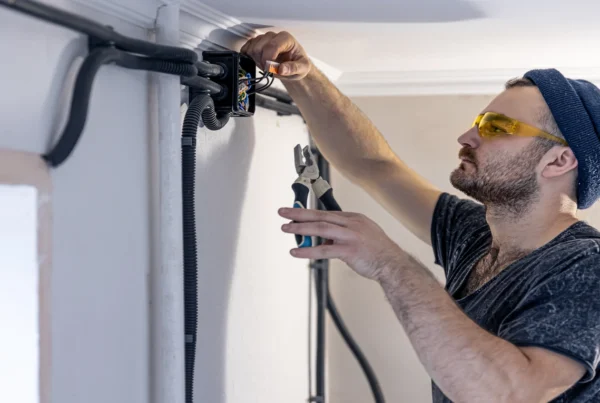
An electrician tests the wiring inside a home switchboard with a multimeter to diagnose an outage. They check circuits one by one to pinpoint faults.
An electrician’s goal is safe power restoration. They won’t just flip the mains back on. After repairing, they thoroughly test the system – pushing buttons, measuring voltages, and using thermal cameras if needed. Only when everything behaves correctly will they re-energise your switchboard. If they found any serious defects, they’ll issue you an official Certificate of Electrical Safety, as required by Victorian law. No certificate, no reconnection.
Home vs Business: Bigger Systems, More Steps
Power outage restoration at a business can be more complex. Commercial buildings have power distribution systems with many panels, heavier loads, and critical equipment. A professional electrician will handle these like this:
- Assess business-critical loads. They’ll ask, “What must stay on?” A bakery might rely on ovens, a shop on fridges, and a Torquay café on its espresso machine. For machines that can’t lose power, electricians often recommend backup solutions (more on that below).
- Coordinate with IT/management. The electrician works with your team: IT people, facility managers, etc. They plan shutdowns or the use of a generator/UPS. During troubleshooting, business downtime costs real money, so an electrician will work quickly and communicate clearly.
- Check sub-panels and backup units. Many businesses have secondary switchboards or UPS units. The electrician will test these backup systems. For example, they’ll ensure your uninterruptible power supply (UPS) kicks in and is functioning. (As one tech blog points out, a UPS acts like an “emergency parachute” for network gear.)
- Inspect whole-site distribution. Sometimes the issue is not just one circuit – maybe a company needs a partial grid cutover. Electricians understand power distribution systems (meters, main fuses, substation feeders) better than most. They may even liaise with the utility to confirm supply.
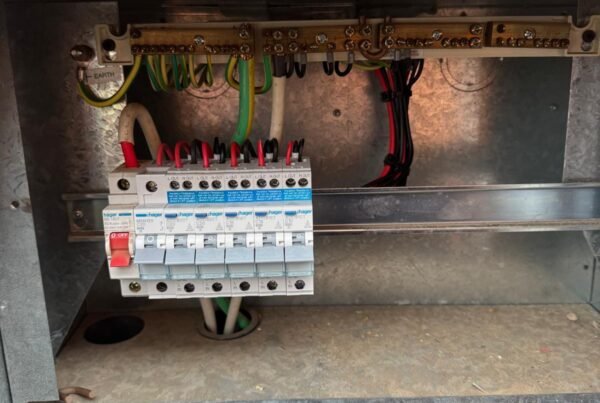
An example of a complex home/business switchboard. Professional electricians are trained to navigate and repair systems like this during power outage restoration, ensuring each circuit is safe to reconnect.
Whether it’s a small shop or a medium office building, the approach is methodical. Licensed electric contractors use their electrical services expertise to walk through each panel and circuit board. They won’t rest until every spark is back where it should be. (And of course they follow all safety standards along the way, because sparky shorts are a real hazard.)
Power Backup Systems: Your Outage Insurance
“Electrician recommends generator?” you might wonder. Absolutely – especially in Torquay, where coastal storms are a thing. Professionals often advise installing power backup systems, so you’re never in the dark. These include:
- Uninterruptible Power Supplies (UPS) – Great for computers and electronics. A UPS is a battery-backed device that kicks in instantly when power fails. It lets you save work or keep servers alive for a short time (usually minutes to an hour). In other words, it’s like having an emergency battery for your Wi-Fi and laptops. One Aussie IT blog says a UPS is like an emergency parachute – it gives you time to land safely.
- Standby generators – These run on fuel (diesel, petrol or even solar+diesel). A generator can keep lights and heavy machinery going for hours or days. Unlike a UPS, a generator powers everything at once. The electrician will make sure it’s correctly wired (with a transfer switch) so it doesn’t backfeed into the grid. While generators require maintenance and fuel, they’re lifesavers during prolonged outages. (Tip: never wire a generator into house wiring without a switch – that’s very dangerous.)
- Battery storage and solar – These are trendy in Torquay thanks to ample sun. A solar panel system paired with a home battery (Powerwall style) can automatically keep essential circuits alive when the grid dies. Electricians can size these systems for your needs – for instance, keeping lights, fridge and Wi-Fi on for a day or more. It’s clean and quiet, and saves on electricity bills too.
Electricians provide electrical services to install and maintain all these backup options. They know which backup fits your lifestyle or business. In fact, one tech article advises that any business, even in a non-disaster zone, should consider a UPS for critical equipment. That way, when an outage hits, your routine doesn’t grind to a halt.
Here’s a quick comparison table for backup options:
| Backup System | Pros | Cons |
| UPS (Battery) | Instantly protects data/electronics | Short runtime (minutes to hours) |
| Standby Generator | Long runtime (hours to days), powers heavy loads | High cost, needs fuel and space |
| Solar + Battery | Clean energy, lower running cost (sunlight) | Expensive install, depends on daylight |
| Portable Battery Pack | Inexpensive, easy to move around | Very limited power (ideal for phones only) |
Power outage restoration experts will help set up and test whichever system you choose. They’ll also teach you to use it safely, since hooking up a generator or battery incorrectly can be just as risky as the outage itself.
Monitoring and Prevention: Power Quality and Distribution
It’s not just about fixing; professionals help prevent future outages. Two advanced ideas electricians bring to the table:
- Power Quality Monitoring: Think of it like a health check for electricity. Electricians can install monitors or analysers that continuously log your supply’s voltage, frequency and spikes. If your grid has unstable voltage or lots of harmonics, these monitors will flag it. For example, an industry electrician might notice a pattern of dips whenever a factory machine starts. By catching that, they can suggest fixes (like power factor correction or surge arresters) before a bigger outage occurs. In short, power quality monitoring helps businesses avoid unplanned downtime by giving early warning of electrical stress.
- Upgrading Distribution Systems: Old switchboards or undersized circuits can cause nuisance faults. During restoration, an electrician might point out that your power distribution system is outdated. They’ll recommend upgrades – maybe a new RCD panel, extra dedicated circuits, or higher-rated main fuses. For example, if your house still has a 1950s fuse box, a modern electrician will replace it with a safe circuit breaker board. Proper distribution systems mean that if one circuit trips, it doesn’t take the whole building with it. So the next time a minor fault happens, the fix is quick and isolated, rather than a full-blown outage.
By investing in these preventive electrical services, you reduce the chance of needing a full “blackout rescue” again. And you’ll feel peace of mind knowing your electrician isn’t just a firefighter – they’re your electrical partner.
Torquay’s Local Factor
Living in Torquay, you’ve got ocean breezes but also bouts of strong winds and occasional wild weather. Local electricians know this terrain. They’ll often work with Powercor (the local distributor) to understand outage patterns. For example, Line crews from Powercor fix downed lines, but an electrician focuses on your property after that. Many Torquay pros also carry portable lighting and tools for emergencies, so even after hours, they can assist (Torquay businesses often use 24/7 emergency electrical services).
Remember, Victorian regulations require any electrician who does outage work to lodge a Certificate of Electrical Safety. This means when I’m done repairing your power outage, the utility company gets official proof you’re good to go. It’s not just busywork – it’s ensuring you and your neighbours stay safe when power flows again.
Conclusion: Stay Prepared and Call the Experts
In the end, Power Outage Restoration is a team effort: it starts with you staying safe and ends with a licensed electrician re-energising your home or business. The key points:
- Safety first. Don’t touch downed lines or faulty wiring. Call emergency services (000) if life-threatening, or dial Powercor (13 24 12) for reported outages. Check your meter and RCD, but no DIY repairs.
- Call a pro. If the problem is at your place, a professional electrical service will systematically diagnose and fix it. They follow Australian standards and won’t leave the site until everything’s certified and safe.
- Invest in backups. Ask about UPS, generators, or solar batteries. These “insurance policies” keep Torquay homes and businesses running through the next storm.
- Plan. Discuss with your electrician about power quality monitoring and system upgrades to avoid outages before they start.
When the lights go out in Torquay, you don’t have to navigate the darkness alone. Trust your electrician – they’ll shed light on the problem and get the power back on in no time. Stay safe, and keep those circuits humming!
Frequently Asked Questions (FAQ)
What is power outage restoration?
It’s the process professionals use to safely diagnose and fix electrical faults so power is fully restored.
Why hire an electrician after a blackout?
Only a licensed electrician can inspect and repair wiring safely. They’ll test and fix switchboards and issue a safety certificate before power is reconnected.
How long does outage restoration take?
It depends on the fault. Minor trips or appliance issues can be fixed in minutes. Major wiring or storm damage may take hours or days as parts need repair, and utility crews may be involved.
What power backup systems do professionals recommend?
Common options include UPS units for electronics, standby generators for large loads, and solar+ battery systems. These keep critical appliances running during outages.
What is power quality monitoring?
It’s a system that continuously checks voltage and load patterns. Electricians use it to spot issues (like voltage sags or spikes) before they cause an outage.